Cholesterol Isn’t the Villain — Until It Turns Against You
Cholesterol Isn’t the Villain — Until It Turns Against You What is Cholesterol? Understanding Its Role in the Body Cholesterol is a fatty substance that...
Cholesterol Isn’t the Villain — Until It Turns Against You
What is Cholesterol? Understanding Its Role in the Body
Cholesterol is a fatty substance that circulates in the blood and is essential for normal body function. Although it is often blamed for heart disease, cholesterol itself is not harmful. In fact, it plays many important biological roles.
Cholesterol is a structural component of cell membranes and helps maintain their stability and flexibility. It is also a building block for:
- Steroid hormones
- Vitamin D
- Bile acids (needed for digestion)
Without cholesterol, normal cell function would not be possible.
Where does cholesterol come from?
Cholesterol has two sources:
1. Endogenous cholesterol (made inside the body)
About 70–80% of cholesterol is produced internally through a process called de novo synthesis. This occurs mainly in the liver and intestines. Even if a person eats no cholesterol, the body can still produce what it needs.
2. Exogenous cholesterol (from diet)
The remaining cholesterol comes from food, especially animal products such as:
- Meat
- Eggs
- Dairy
- Fried and processed foods
Both sources contribute to total cholesterol levels in the blood.
How cholesterol travels in the blood
Cholesterol cannot dissolve in blood because it is a lipid. To travel through circulation, it is packaged with proteins to form lipoproteins.
Important lipoproteins include:
VLDL (Very Low-Density Lipoprotein)
Carries triglycerides and cholesterol from the liver to tissues.
LDL (Low-Density Lipoprotein) — “bad cholesterol”
Formed from VLDL after triglycerides are removed. LDL is rich in cholesterol and delivers it to body tissues.
HDL (High-Density Lipoprotein) — “good cholesterol”
Removes excess cholesterol from tissues and carries it back to the liver. This protective process is called reverse cholesterol transport.
A healthy balance between LDL and HDL is crucial.
When cholesterol becomes a problem
Hyperlipidemia means elevated levels of lipids (cholesterol or triglycerides) in the blood.
It can be:
Primary (genetic)
Inherited disorders that affect lipid metabolism. These are rare but may cause early cardiovascular disease.
Secondary (acquired)
More common and caused by:
- Unhealthy diet
- Obesity
- Sedentary lifestyle
- Diabetes
- Hypothyroidism
- Kidney disease
- Certain medications
- Aging
- Smoking
Most patients have a polygenic tendency — meaning genes plus lifestyle together raise cholesterol.
How high LDL leads to disease (Atherosclerosis)
Atherosclerosis is the main complication of high cholesterol.
When LDL levels become excessively high:
- LDL enters the arterial wall
- LDL becomes oxidized (damaged)
- Immune cells (macrophages) engulf oxidized LDL
- Foam cells form
- Fatty streaks develop
- Plaques grow and harden arteries
This process narrows blood vessels and reduces blood flow.
Atherosclerosis often remains silent until 70–80% of the artery is blocked.
If a plaque ruptures, a blood clot may form and suddenly block circulation.
This can cause:
- Heart attack
- Stroke
- Vascular dementia
- Heart failure
- Erectile dysfunction
- Limb loss
Understanding the Physical Meaning of Cholesterol Values
LDL — The Depositing Cholesterol
Low-Density Lipoprotein (LDL) carries cholesterol from the liver to body tissues. When present in excess, LDL tends to deposit cholesterol on the inner walls of blood vessels, gradually narrowing them. This process, known as atherosclerosis, reduces blood flow and increases the risk of heart attack, stroke, peripheral arterial disease, and even limb loss in severe cases.
HDL — The Protective Cholesterol
High-Density Lipoprotein (HDL) plays a protective role. It removes excess cholesterol from blood vessels and transports it back to the liver for elimination. Adequate HDL levels help keep arteries clean and flexible, lowering cardiovascular risk. In simple terms, HDL acts as the body’s natural cholesterol-cleaning system.
VLDL — The Fat Carrier
Very Low-Density Lipoprotein (VLDL) primarily carries triglycerides in the bloodstream. Elevated VLDL indicates increased fat transport, contributing to thicker blood and promoting plaque formation. High VLDL levels are closely linked with increased LDL production and higher risk of cardiovascular disease.
Triglycerides — Excess Stored Fat in Blood
Triglycerides represent unused energy stored as fat. High levels usually result from excess intake of sugar, refined carbohydrates, alcohol, or a sedentary lifestyle. Elevated triglycerides make the blood more fatty and viscous, increasing the risk of heart disease, diabetes, fatty liver, and acute pancreatitis when levels are very high.
Physical signs and diagnosis
Doctors may look for:
- Xanthomas (fat deposits under skin)
- Abnormal heart sounds
- Reduced peripheral pulses
- Arterial bruits (narrowed vessels)
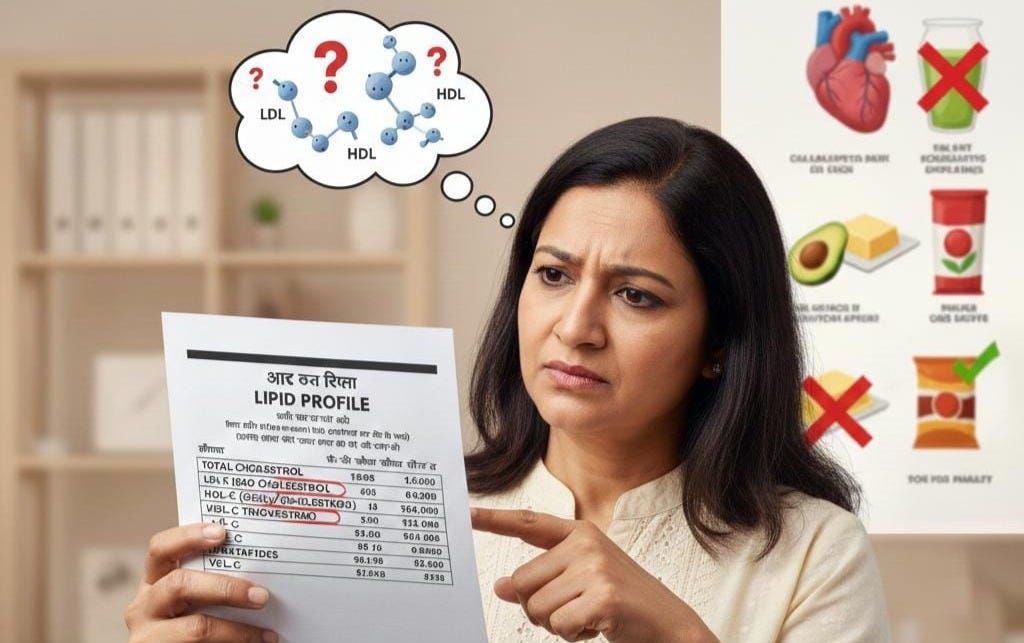
The most important test is a fasting lipid profile, which measures:
- Total cholesterol
- LDL
- HDL
- Triglycerides
- VLDL
In Summary
Cholesterol is not the enemy — imbalance is.
The body needs cholesterol to survive. Problems arise when LDL becomes excessive and protective HDL is too low. Genetics, diet, and lifestyle all influence this balance.
Early detection, healthy habits, and regular screening can prevent long-term complications.
This article is for educational awareness and does not replace a personal medical consultation.