Chickenpox, Immunity, and Preventive Medicine in Homeopathy — Clearing the Misconception
Chickenpox, Immunity, and Preventive Medicine in Homeopathy — Clearing the Misconception Chickenpox: A Brief Overview Chickenpox is a viral infection ca...
Chickenpox, Immunity, and Preventive Medicine in Homeopathy — Clearing the Misconception
Chickenpox: A Brief Overview
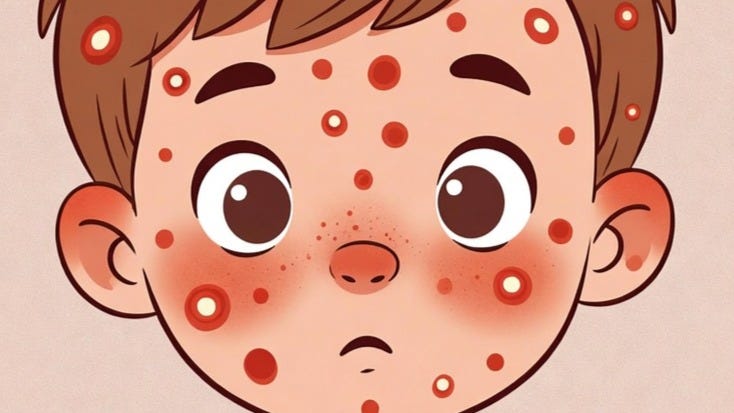
Chickenpox is a viral infection caused by the Varicella‑zoster virus. It is a contagious illness commonly seen in childhood, though it can affect adults as well.
Period of Spread
Chickenpox spreads very easily. A person becomes contagious 1–2 days before the skin eruptions appear and continues to spread the infection until all the blisters crust over, usually about 5–7 days after the eruption. This explains why infection often spreads even before the disease is recognized.
Incubation Period
After exposure to the virus, symptoms do not appear immediately. The incubation period of chickenpox is usually 10–21 days, after which fever, body ache, and the characteristic skin eruptions begin to appear.
Does Everyone Get Infected?
Not everyone exposed to the virus develops chickenpox. People can broadly be understood in the following way:
People Who Get the Infection
Those who develop chickenpox usually have a working immune system that is able to recognize the virus and respond to it. The appearance of infection indicates an active immune response.
People Who Do Not Get the Infection
This group can be divided into two categories:
- Highly healthy individuals with strong resistance — this group is relatively rare today.
- Individuals with weak or deeply disturbed health, where the immune system does not respond properly due to underlying chronic diseases or deeper pathology.
Important Note
Getting an infection does NOT mean weak health. In many cases, it reflects a responsive and functioning immune system reacting appropriately to exposure.
It is also important to remember that the Varicella‑zoster virus remains dormant in the body after the first infection. A second activation of this virus can lead to Herpes Zoster (shingles), which typically presents as painful eruptions along the course of a nerve.
Preventive Medicine in Homeopathy — The Correct Concept
The concept of preventive medicine in homeopathy developed during deadly epidemics and pandemics, such as cholera. During such outbreaks, homeopaths would:
- Study the common symptom pattern of the epidemic
- Identify a group of closely matching remedies
- Select medicines based on similarity, not as a universal solution
Individualisation Is Essential
Even in epidemic situations:
- There is no single preventive remedy for everyone
- Remedies are selected based on individual susceptibility and symptom expression
- A medicine suitable as preventive for one person may be unsuitable for another
Final Thought
Giving a preventive medicine without understanding the individual goes against the fundamental principle of homeopathy. Preventive homeopathy, like therapeutic homeopathy, must always be based on individualisation, careful observation, and ethical responsibility.
A Question to Reflect On
Should every disease be prevented at any cost, or can experiencing an infection with a well-functioning immune system be a natural expression of health? — Choose wisely.
This article is for educational awareness and does not replace a personal medical consultation.